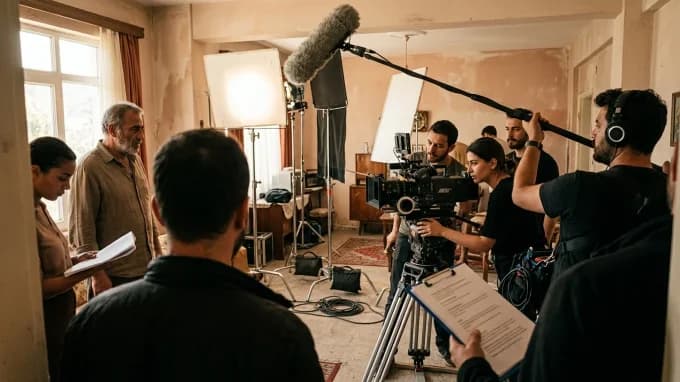
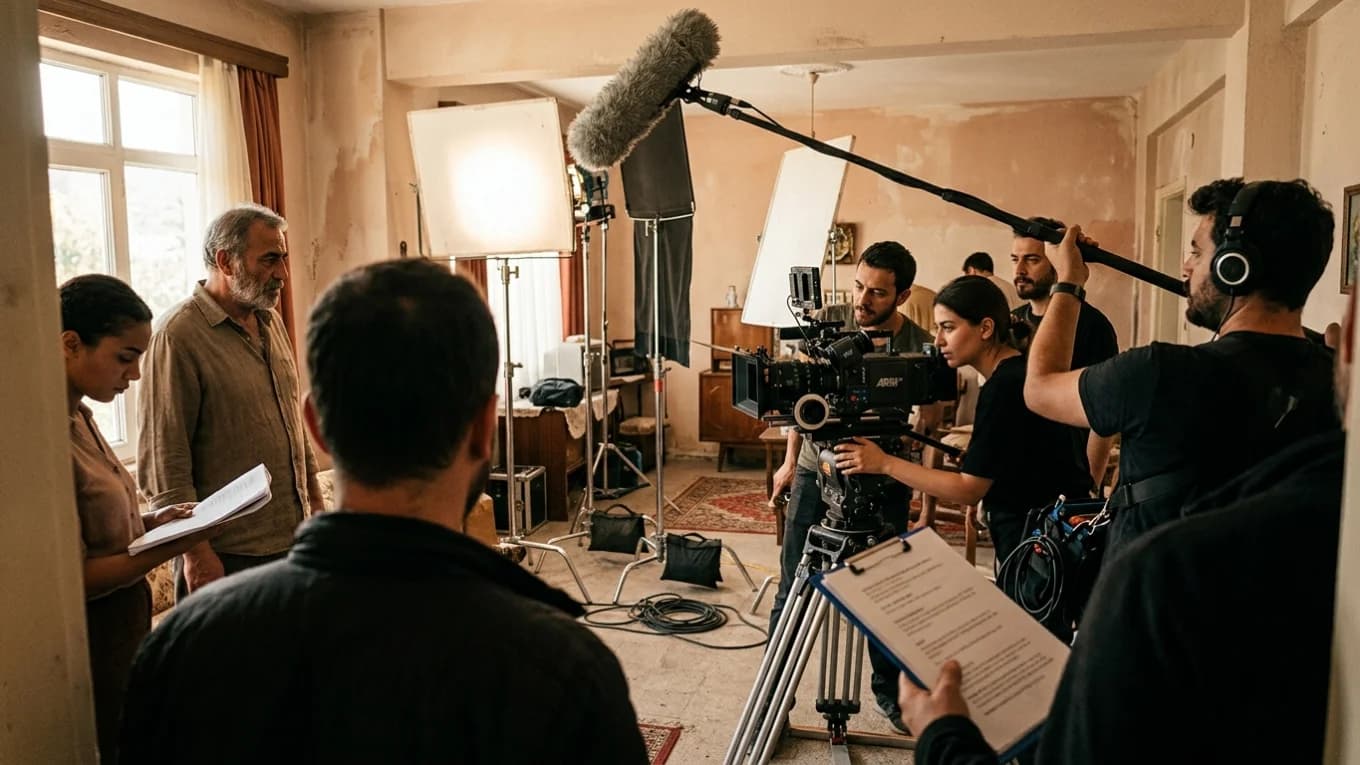
While speaking with a production team on set in Ardahan, I met a young girl who, with a few selfie photos in hand, asked, "Can I apply to an agency?" The photos were taken with a phone, the background was messy, and the light was coming directly from the front. She was doing something wrong, but no one had ever told her. It was at that moment that I once again saw how little information candidates from remote corners of Anatolia start with.
Ardahan is geographically distant from the industry's centers, yes. But this is not a real obstacle to applying to a cast agency. Because digitized application processes, with proper profile preparation, put a candidate from Ardahan at the same table as a candidate from Istanbul. The point is: preparation makes a difference in opportunities. I've had to hear this repeatedly in my conversations with many people, from production companies in Ankara to production teams in the Black Sea region.
Understand the Elements That Create the First Impression in Your Application
When cast agencies look at a candidate, they evaluate several things in the first second: photo quality, variety of facial expressions, and the completeness of the profile. These three elements complement each other; if there's a weakness in one, the profile falls into the background, no matter how strong the others are. If you live in a city like Ardahan where large studios are not available, you need to learn to use natural light smartly. Photos taken in the morning or late afternoon, preferably outdoors and with a simple background, largely replace expensive studio equipment.
Short answer: a studio is not essential for a good photo, but the right light is. For facial expression photos, also known as "headshots," at least two different expressions should be presented: one natural-neutral, and the other a bit more energetic. In addition to these, a full-body photo also completes the profile. When preparing the profile, information such as age, height, weight, and any stage experience should be entered completely. A fabricated list of experiences immediately comes to light during a screen test and shakes the agency's trust. An honest profile is always a more solid starting point.
Also, there's this: in Ardahan specifically, regional accents and physical distinctiveness can sometimes turn into an advantage. Production companies looking for characters that reflect local culture or realistic Anatolian characters may occasionally prioritize candidates with a distinct regional identity. This should be seen not as a limitation, but as a usable strength.
Understand the Screen Test Process and Prepare Properly
After the application is approved, most agencies invite the candidate for a screen test. This stage brings up one of the most frequently asked questions: "What is expected?" A screen test is not an exam, but an introductory session. The agency observes your mannerisms, your naturalness in front of the camera, and how you react to directions. It's not a memorized performance that's sought, but sincerity.
From a preparation standpoint, it's preferred to go to the screen test in simple clothing. Striking patterns and excessive accessories complicate the image. Hair and makeup should also be kept natural; the agency wants to see your real potential, you're entering a filming environment, not a costume party. Additionally, practicing a short introductory speech a few times in front of a mirror before the screen test largely prevents freezing up in front of the camera. This is a small but effective practice.
For candidates traveling from Ardahan for a screen test, the process of planning travel and accommodation should not be overlooked. Arranging transportation and accommodation in the agency's city beforehand prevents last-minute stress. Going to the shoot day with a calm mind directly affects performance. My acquaintances working in production companies often state this: it's usually not the most prepared candidate who progresses, but the calmest one.
Keep Your Profile Active and Be Patient During the Project Process
A cast application is not a one-time action, but a continuously updated process. Profile photos should be renewed at least once a year; informing the agency about changes in appearance (haircut, weight change, aging) also maintains the accuracy of the profile. Agencies prioritize active and up-to-date profiles instead of sending role applications to outdated ones. This is a practical reality.
There's a trap that candidates from Ardahan sometimes fall into: remaining inactive after completing the application. Local theater groups, short film projects, or commercial shoots are valuable starting points for gaining stage experience. Such experiences are added to the profile and make the candidate more tangible in the eyes of the agency. These words, which I personally heard during an interview with a production company, stuck with me: "Among the profiles sent to us, candidates with a local theater background always stand out." Because stage discipline also reflects on camera.
The issue of patience is another matter. The fee (kaşe), or the payment per project, varies according to experience and the size of the project. Keeping expectations broad in initial projects accelerates the process of establishing oneself in the industry. Because the basic rule is this: small roles open the door to big opportunities. As someone who has spent many years in this business, I have repeatedly seen that candidates who come with A-list expectations for their first role do not last long in the industry. The biggest weapon for a young candidate from Ardahan is to embark on this journey at peace with this reality.
In conclusion, let me summarize: geographical distance is no longer an excuse. The right photo, an honest profile, a well-prepared screen test, and a consistently active attitude bring a candidate from Ardahan to equal terms with a candidate from any other city. Two things are important: preparation and patience. The rest is a matter of meeting the right agency for the right project.